A Practical Guide by Suncoast Outdoor Living
Quick Answer
In Queensland, most roofed patios and patios attached to a home require building approval. Smaller freestanding structures may not require approval if they meet certain size, height and setback requirements, but local council rules and planning overlays can still apply.
Whether you need council approval before building a patio depends on a few key factors: the size and design of the structure, how it relates to your home, and the rules that apply in your area. This guide covers what you need to know before you start.
When Do You Need Council Approval?
In Queensland, building work, including patios and pergolas, is regulated under the Building Act 1975 and the Building Regulation 2021. Whether a building approval is required depends on several factors.
Size and Height
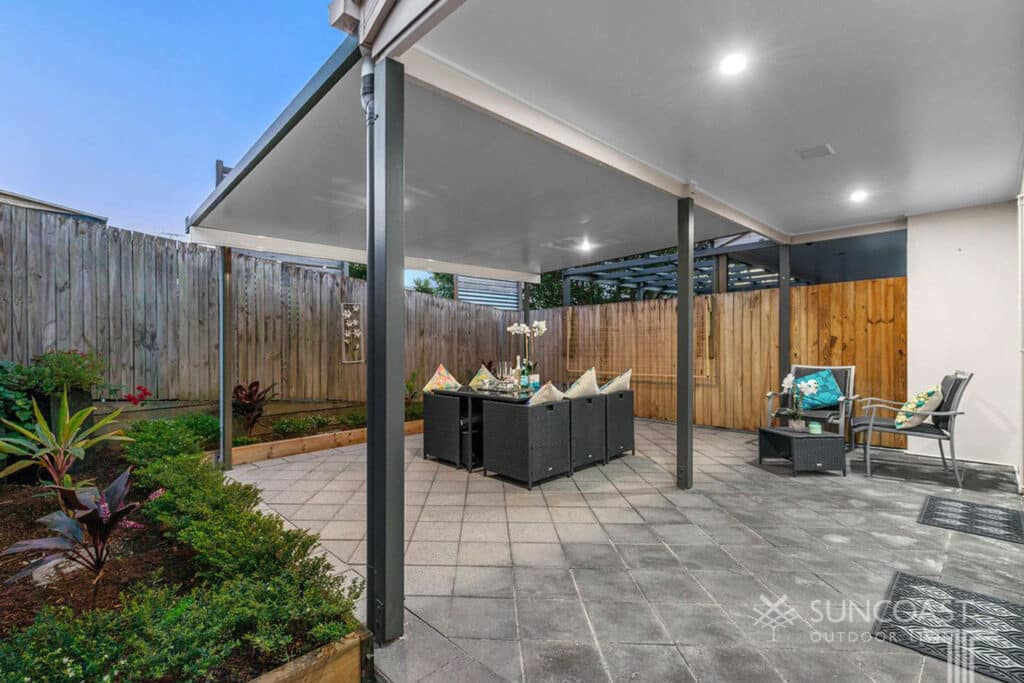
Most roofed patios require building approval, particularly when attached to the home. As a general guide, unroofed freestanding structures under 10 square metres and no higher than 2.4 metres may not need a permit. Structures that exceed these dimensions, or that are attached to the home, will almost always require approval. On sloped blocks, height is measured from natural ground level.
Roof Type
A solid-roofed patio is treated differently from an open pergola or shade sail. Once a structure has a fixed roof, building approval is generally required, especially when the patio is attached to the home. Open or unroofed structures are more flexible, but they still need to comply with size and setback requirements.
Attached or Freestanding
A patio attached to your home is considered part of the dwelling and will almost always require building approval. Freestanding structures are assessed separately and may qualify for a simpler pathway, provided they meet the relevant size and siting requirements.
Boundary Setbacks
Every structure must meet minimum setback distances from your property boundaries. Setback issues are one of the most common reasons applications are delayed or refused. The Queensland Development Code outlines standard setback requirements, but local council rules can vary.
Zoning and Planning Overlays
Your property may sit within a planning overlay that imposes additional restrictions. Common overlays in south-east Queensland include flood hazard areas, bushfire zones and heritage precincts. These overlays can impose additional requirements regardless of the size of the structure. You can check which overlays apply to your property using the Queensland Government’s Development.i mapping tool.
Cyclone Areas
Queensland’s building codes are stricter in Wind Region C, which covers cyclone-prone areas generally north of Bundaberg. In these areas, many structures that may be exempt elsewhere will require a building approval and engineering design.
Local Council Rules
Requirements vary between council areas. Brisbane City Council, Sunshine Coast Council, Noosa Council and Moreton Bay Council each operate under their own local planning scheme. What is acceptable in one area may not be in another, so always confirm what applies to your property before committing to a design.
When You May Not Need Approval
Some small or simple patio structures may qualify as accepted development under the Building Regulation 2021, meaning no approval from a certifier is required before construction. This generally applies to unroofed freestanding structures under 10 square metres, no higher than 2.4 metres, with no single side longer than 5 metres, that meet boundary setback requirements and are not in a cyclone area.
Accepted development does not mean unregulated. The structure still needs to meet building standards, and conditions on your title or a planning overlay can override the standard thresholds. In practice, most standard patios with a roof will require building approval. Always confirm before you build.
Important
Building without a required approval can result in fines, orders to alter or demolish the structure, and complications when it comes time to sell or insure your property. If you are unsure, check with a private building certifier before work starts.
The Approval Process
In Queensland, building approvals are handled by a private building certifier, not your local council directly. Here is a high-level overview of the process.
• Design: A QBCC-licensed builder or building designer prepares plans to meet relevant codes and your local planning scheme. Getting the design right early helps avoid delays later.
• Engaging a certifier: Your private building certifier reviews the plans, checks compliance and issues the building approval. In most cases, your builder will coordinate the certifier on your behalf.
• Lodging the application: Your certifier lodges the application along with the required documentation, including site plans and structural drawings.
• Assessment and approval: Timeframes vary by project. Straightforward applications are often turned around within a few weeks.
• Construction and final inspection: Once approval is issued, work can begin. A final inspection confirms the build matches the approved plans.
Common Mistakes to Avoid
• Starting work without approval: Building before a required approval is issued can result in enforcement action, including orders to modify or remove the structure at your own expense.
• Assuming the project is exempt: A roofed structure, an attached design, or a property in a cyclone area can all change whether building approval is required. Confirm before you build.
• Ignoring setback requirements: Even a small encroachment can require a redesign or a formal application, with no guarantee of approval.
• Missing planning overlays: Overlays are not always obvious. Flood hazard areas, bushfire zones and heritage precincts all impose additional requirements that can affect your application.
• Using an unlicensed builder: Any building work valued over $3,300 must be carried out by a QBCC-licensed contractor. Using an unlicensed builder removes your access to Queensland Home Warranty Scheme insurance and any formal complaints pathway through the QBCC. You can check a builder’s licence on the QBCC register before signing anything.
How Suncoast Outdoor Living Can Help

Suncoast Outdoor Living designs and builds custom patios across the Sunshine Coast, Noosa, Moreton Bay, Brisbane and surrounding areas. We are a QBCC-licensed builder, and we know the approval requirements that apply across each of the council areas we work in.
Every design we produce takes council requirements, setbacks and local planning rules into account from the start. We work with registered private building certifiers and manage the approval process on your behalf, so you are not left chasing paperwork or interpreting building codes on your own. If your project involves a sloped block, tight setbacks or a planning overlay, we have the experience to handle it.
Where a design option exists that avoids the need for building approval, we will let you know. Where approval is required, we manage the process so your project stays on track.
Frequently Asked Questions
Do all patios need council approval in Queensland?
Not all patios require building approval, but most do. Roofed patios and patios attached to your home will almost always need a building development permit. Small unroofed freestanding structures may qualify as accepted development and not require approval, provided they meet specific size, height and setback criteria. When in doubt, check with a private building certifier before you start.
Can I build a patio myself in Queensland?
In Queensland, most building work valued over $3,300 must be carried out by a QBCC-licensed contractor. If you want to manage the project yourself and the total value exceeds $11,000, you will need to apply for an owner-builder permit through the QBCC. Most standard patio builds will exceed the $3,300 threshold, so a licensed builder is required in the majority of cases.
How long does patio approval take in Queensland?
Timeframes depend on the complexity of the project and how promptly documentation is supplied. Straightforward applications are often approved within two to four weeks. Projects with more complex site conditions, or that require referral to the council for a planning matter, may take longer. Having complete and accurate documentation ready from the outset is the most effective way to keep the process moving.
Get in Touch
Approvals can feel complicated, but with the right team, they are manageable. If you are unsure where your project sits, Suncoast Outdoor Living can help you understand the likely approval pathway before construction begins. Whether you are in the early stages or ready for a quote, we are happy to talk it through.
Contact Suncoast Outdoor Living for advice or an obligation-free quote at suncoastoutdoorliving.com.au.

